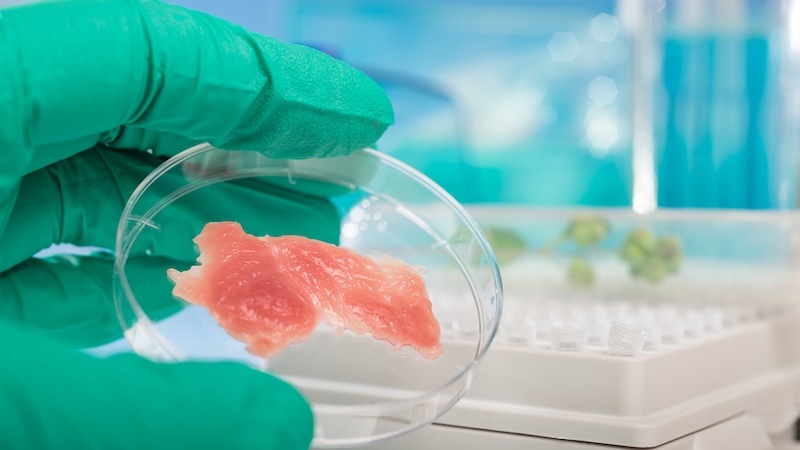
Meat that never mooed and a pickled vegetable dish. Cultivated, lab-grown meat may be coming to a market near you, but what is it? Kimchi is already at a nearby market, but what is it and is it healthy? Environmental Nutrition answers your questions.
What to know about lab-grown meat
Staff, Environmental Nutrition
Question: What is lab-grown meat?
Answer: You’ve probably been hearing more and more about the possibility of seeing meat products on the supermarket shelves that have been grown in a lab (instead of coming directly from a farm). And now you’re wondering: Meat from a lab? Is this a real thing? The short answer is yes, this is a real thing. So, unlike plant-based meats, in which non-animal-based ingredients are combined to make meat substitutes, scientists are working to create real “genuine” meat in a lab.
This “cultivated” meat is not plant-based and is completely made of animal sourced materials; namely, scientists have cultivated animal cells directly and these cells are used to create a meat-like product. In this lab-grown replica, the cells are arranged in a similar manner to the original animal product and there are many similarities in the sensory and nutritional profiles between the two options.
As this process is improved, this new sourcing of “meat” eliminates the need to raise and farm animals specifically as a food source and has significant potential to reduce negative impacts on the climate (typically experienced through the conventional sourcing of farmed animal products).
Health benefits of kimchi
Heidi McIndoo, MS, RD, Environmental Nutrition
Question: What is kimchi and are there health benefits associated with it? Should I add it to my diet?

Answer: For those who are unfamiliar, kimchi is a spicy and tangy pickled vegetable dish. Kimchi hails from Korea, and it consists of salted and fermented vegetables (like cabbage and Korean radish) and a mouth-watering collection of seasonings such as ginger, spring onions and gochugaru (or red pepper powder).
This flavorful concoction can be eaten as a side dish, alongside white or brown rice, or within recipes for porridges, soups, stews and more.
Not only can kimchi liven up your taste buds, but it also is a good source of fiber (while also being low in calories), and can be a source of vitamin A, thiamin, riboflavin, calcium and iron. Also, since kimchi is a fermented food, it may exert some of the probiotic benefits associated with this type of prepared food, contributing to a positive impact on gastrointestinal health.
Environmental Nutrition is the award-winning independent newsletter written by nutrition experts dedicated to providing readers up-to-date, accurate information about health and nutrition in clear, concise English. For more information, visit www.environmentalnutrition.com.
©2026 Belvoir Media Group, LLC. Distributed by Tribune Content Agency, LLC.
Read more articles to improve your health and diet on Seniors Guide:
Should You Be Wary of Sulfites?