Acai bowls have become a staple of health cafes, fitness influencers, and social media feeds – often promoted as the ultimate “clean” breakfast or post-workout meal. But are açaí bowls healthy, or are they just smoothies served in a bowl with good marketing? The answer lies in how they’re made.
Acai nutrition
Acai berries, native to the Amazon rainforest, are naturally rich in antioxidants, particularly anthocyanins, which help combat oxidative stress in the body.
They also provide fiber and contain small amounts of healthy fats, including omega fatty acids. On their own, acai berries can be a nutritious addition to a balanced diet.
However, most people don’t consume plain acai berries. Instead, they’re blended into bowls with a variety of fruits, liquids and toppings — where the nutritional profile can shift dramatically.
When acai bowls become sugar bombs
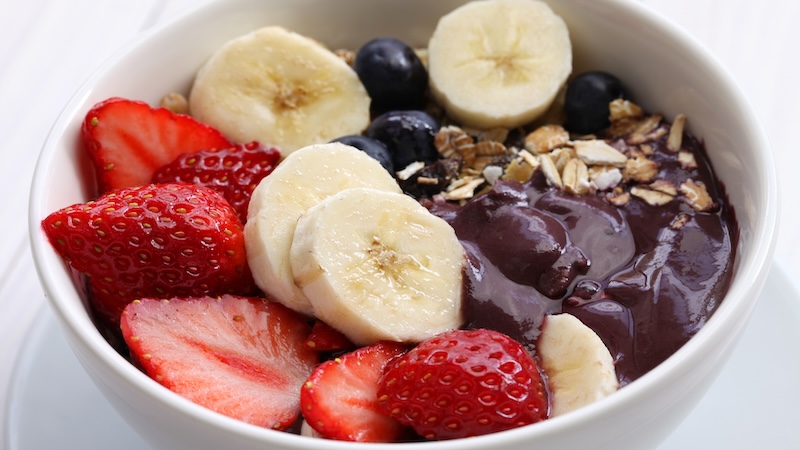
Many commercially prepared acai bowls contain sweetened acai purees, fruit juice bases, and generous toppings such as granola, honey, coconut flakes and dried fruit. While these ingredients may be “natural,” they can collectively deliver as much sugar as a dessert — sometimes exceeding 70 grams per serving.
Without sufficient protein or healthy fats to slow digestion, these bowls can cause blood sugar spikes, followed by energy crashes. In these cases, an acai bowl may be more comparable to a treat than a nourishing meal.
Build a healthy acai bowl
The key to making an acai bowl healthy is balance. When prepared thoughtfully, it can provide antioxidants, fiber, protein and sustained energy.
- Start with the right base. Choose unsweetened frozen acai packets and blend them with unsweetened plant milk or water. Avoid fruit juice bases, which add unnecessary sugar without fiber. A small amount of banana – about half – is enough to create a creamy texture without overwhelming the bowl.
- Be mindful with fruit. Berries such as blueberries, strawberries and raspberries are lower in sugar and high in fiber and antioxidants.
- Add protein. Protein transforms an acai bowl from a snack into a satisfying meal. Options include protein powder, Greek yogurt, skyr, silken tofu or nut butter. Aim for at least 15 to 20 grams of protein if the bowl is replacing a meal.
- Choose toppings wisely. Toppings should add texture and nutrients, not excessive calories. Chia seeds, flaxseeds, nuts or a small portion of granola (about 1/4 cup) work well. Fresh fruit is preferable to dried fruit, which is more concentrated in sugar.
- Limit added sweeteners. If sweetness is needed, rely on fruit first. A light drizzle of honey or maple syrup is fine, but restraint is essential.
The bottom line
Acai bowls aren’t inherently healthy or unhealthy – they’re customizable. When built with whole ingredients, adequate protein, and controlled portions, they can be a nutrient-dense, energizing meal. When overloaded with sweeteners and toppings, they quickly cross into dessert territory. As with most nutrition trends, intention matters more than aesthetics.
Environmental Nutrition is the award-winning independent newsletter written by nutrition experts dedicated to providing readers up-to-date, accurate information about health and nutrition in clear, concise English. For more information, visit www.environmentalnutrition.com.
©2026 Belvoir Media Group, LLC. Distributed by Tribune Content Agency, LLC.
Read more about healthy foods and nutrition on Seniors Guide:
Are All Calories Equal?