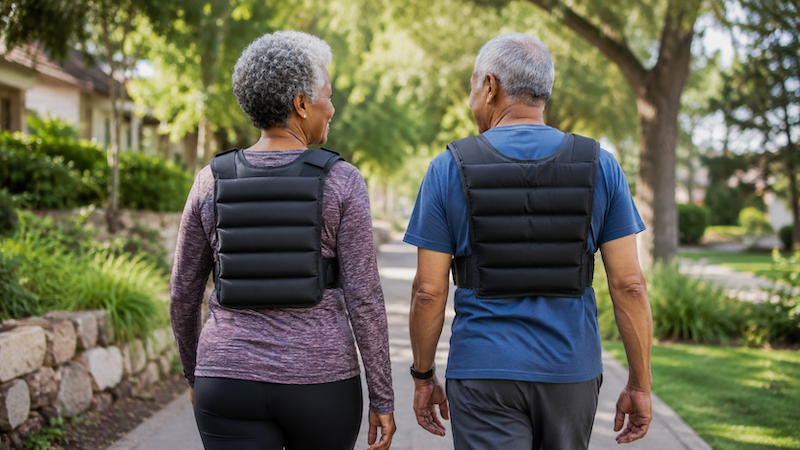
The weighted vest has become a trendy piece of fitness equipment. Wearers pack it with removable weights during exercise to add resistance during walking or workouts. While it offers benefits to many users, including older adults, it’s not for everyone. Seniors Guide writer Terri Jones looks into the trend.
You may have seen someone in your neighborhood wearing what looked like a military tactical vest and wondered what that was all about! That curious piece of gear is called a weighted vest. When worn while walking or running, doing lunges, squats and more, it intensifies the workout, burning calories, increasing strength, building bone (or reducing bone loss) and improving cardiovascular health.
Sound like something you might want to give a try? Before you strap on one of these vests, we’ve investigated its benefits and risks for seniors so you can know whether a weighted vest is a wise way to take your workouts up a notch.
First, the benefits of a weighted vest
A weighted vest adds extra load to your body while you work out. It’s an effective form of resistance training, potentially helping you improve endurance, burn more calories, and build muscles. A weighted vest adds resistance without requiring you to hold weights or manage bands, making it useful for walking, step-ups, squats, and other weight-bearing exercises.
These vests can also help you build bone as aging slowly robs you of it. “Wearing a weighted vest while exercising increases bone formation and decreases bone resorption,” Dr. Korsh Jafarnia, chief of Houston Methodist Orthopedics and Sports Medicine at Houston Methodist West Hospital, explained to Prevention magazine. “When the skeletal system is loaded or stressed, this stimulates bone-forming cells.”
When they stop producing estrogen during menopause, women are at greater risk of bone loss. One study of postmenopausal women found that only 12 weeks of exercise with a weighted vest was effective in helping offset this loss.
But that’s not all! Some in the fitness field, including exercise guru Denise Austin, believe that weighted vests can even improve your posture. When used properly, the vests can open up your chest, plus make you more aware of how you’re standing.
Now, the risks
While weighted vests are putting stress on your bones to help strengthen them, they can also unduly stress your joints. If you have arthritis of the hips, knees, or ankles, wearing a weighted vest can increase inflammation as well as pain.
And if you already have back or neck pain, this exercise tool may make it worse. “Wearing a weighted vest “puts pressure on your spine, and if you have spinal stenosis or significant disc degeneration, it can cause problems all the way to the neck,” explains Terry Downey, a physical therapist at Spaulding Rehabilitation Network. Plus, those with osteoporosis or a history of vertebral or hip fractures should proceed with caution, starting with a very low weight to avoid potential injury.
Exercising with that extra load will also cause your heart and lungs to work harder. If you have pre-existing cardiovascular and respiratory problems, you should consult your physician before adding a vest to your exercise program.
A weighted vest can improve posture if properly fitted and balanced; however, this type of wearable weight, which shifts your center of gravity, may cause poor posture if the weight is too heavy or incorrectly distributed. And if you’re slouching, that stance can put added strain on your back and muscles.
Also, by shifting your center of gravity, a weighted vest can cause you to lose your balance. If you already have problems with balance, a weighted vest could put you at a much greater risk of falling. Consult your doctor if any of the above risks apply to you.
A few tips before you suit up
If you’ve considered the benefits as well as the risks, here are some tips for adding a weighted vest to your exercise regimen:
- Make sure the vest is made of a breathable fabric and fits snugly on your torso so it doesn’t shift or chafe (but it also shouldn’t be too tight).
- Weights shouldn’t be fixed but removable, which allows you to shift positioning as well as adjust the total weight you’re carrying.
- Start with weights equal to about 1% to 5% of your body weight and gradually work up from there. Never exceed 10% of your weight.
- Always become familiar with new workouts before incorporating a weighted vest.
- Limit use of a weighted vest to no more than three times a week, recommends Bharav Patel, DPT, physical therapist at Atlantic Health.
- Continue strength training for your upper body as before. A weighted vest doesn’t replace dumbbells or resistance bands for strengthening the arms, shoulders, chest, or upper back.
There’s always something new and groundbreaking out there promising to help you lose weight, grow stronger, and become a better version of yourself. But before adding anything different to your workout, always look before you leap (or run or squat!). And as one doctor of sports medicine advises, “start low and go slow.” Your health is more important than just being a part of the latest fitness trend.