Ohio’s history and culture can educate and entertain travelers and residents alike, while these iconic Ohio foods provide sustenance along the way. Seniors Guide writer Lisa Monroe reports.
The culinary heritage in Ohio runs deep, reflecting the state’s rich agricultural heritage, Midwestern practicality, and diverse immigrant traditions.
German, Greek, and Eastern European immigrants helped shape the state’s delicious landscape, as in Greek-inspired Cincinnati chili, German-inspired Goetta, and pierogies, introduced by Polish, Ukrainian, and Slavic immigrants. Many of the ingredients featured in Ohio’s comfort foods originate in the state, which is a major producer of corn, soybeans, dairy, hogs, and Swiss cheese, producing more of the holey cheese than any other state.
Must-try iconic Ohio foods
These seven iconic Ohio foods, from appetizer to dessert, have roots in Ohio and reflect the state’s history and culture.
Johnny Marzetti
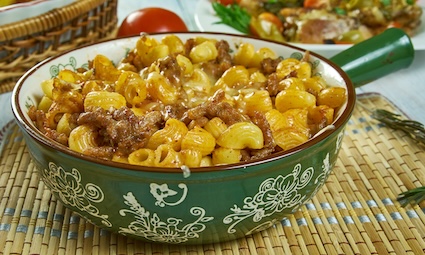
Marzetti’s, an Italian restaurant established in the late 1800s in Columbus, Ohio, is said to have created the namesake baked casserole. The story goes that Teresa Marzetti created the casserole at her family’s restaurant for Ohio State University students, who had hefty appetites and tight wallets. She named it after her brother-in-law, Johnny. Similar to goulash, the hearty dish is made with ground beef, pasta, cheese, and tomato sauce. It’s now a popular comfort food served throughout the Midwest.
Goetta
Goetta originated in the Cincinnati region, in southern Ohio and northern Kentucky, during the early 19th century. This sausage patty was introduced by German immigrants as a thrifty, regional breakfast staple blending pork, beef, and steel-cut oats. People in the Cincinnati area make their own homemade Goetta using their favorite spices – it’s a great way to stretch meat – or they buy it already made. Goetta has been produced for more than 80 years by Glier’s Meats in Covington, Kentucky, just across the Ohio River. There’s even a multi-day festival called Glier’s Goettafest every summer where several hundred thousand people gather to celebrate and chow down on this German-American sausage.
Sauerkraut Balls
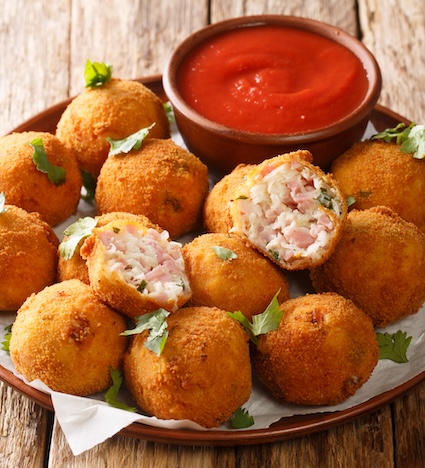
Combine finely chopped sauerkraut, sausage or ham, cream cheese, and spices. Roll the mix into ¾-inch balls, roll each in egg and bread crumbs, and deep fry them. You’ll have an appetizer home run! The regional specialty is said to have originated with German immigrants in northeast Ohio, including Cleveland and Akron, in the mid 20th century. The balls are often served as snacks at bars and during the holidays in the Cleveland area. In 1996, sauerkraut balls were named the official food of Akron.
Cincinnati Chili
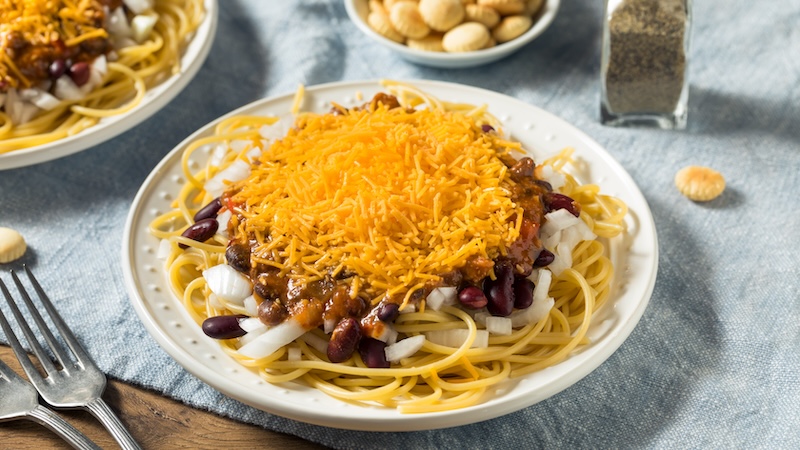
A unique, sweet and savory meat sauce, seasoned with Mediterranean spices, is served over spaghetti noodles and garnished with any or all of three traditional toppings: shredded cheddar cheese, chopped onions, and kidney beans. The sauce is made with ground beef, onion and garlic, tomato sauce or paste, vinegar, and seasonings such as Worcestershire sauce, unsweetened cocoa powder, allspice, cloves, cayenne pepper, cinnamon, cumin, and chili powder. It’s so delicious, it can also be served over hot dogs, burgers, pizza, cheese fries – or simply as a bowl of chili.
The chili sauce was first served at Cincinnati restaurants in the 1920s, introduced by Macedonian immigrants. Some of the best versions of this chili can be found in small local restaurants in Cincinnati, but you can find it across the state.
Polish Boy
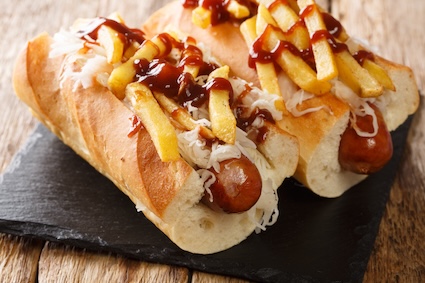
This hearty sandwich is a Cleveland staple consisting of a sausage (usually kielbasa) in a toasted bun, topped with coleslaw, French fries, and tangy barbecue sauce. It dates to the 1940s and became popular in the late 1960s and early 1970s at well-known barbecue restaurants in Cleveland, especially on the East Side.
Shaker Lemon Pie
This tangy pie was first served in Ohio Shaker communities back in the early 1800s. It is made with whole, paper-thin sliced lemons macerated in sugar for 24 hours to create a marmalade-like filling, mixed with eggs, and baked in a pastry crust. Other ingredients, like ginger and blueberries, have been added since the pie’s creation. Shaker lemon pie uses the entire lemon – including the rind and pulp – so nothing goes to waste. This makes sense because citrus fruit was an expensive, imported luxury back in the 19th century, and Shakers valued frugality. This dessert is sometimes found at specialized bakeries and restaurants, but you can also whip one up yourself.
Buckeyes
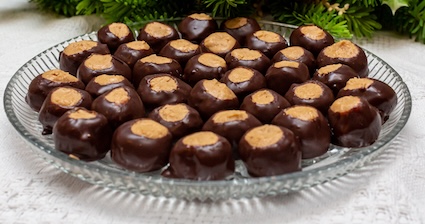
If you’re ever seen a buckeye nut from Ohio’s state tree, you’ll understand this candy’s name. The recipe dates from 1964, and they gained popularity during football season with fans of the Ohio State Buckeyes. Buckeye balls are made of peanut butter fudge partially dipped in chocolate, with a tan circle of peanut butter left peeking through on one end, thus resembling the nut (which, ironically, is toxic). These delicious treats are served all over the state – and beyond – especially during the holidays and football season, and make regular appearances at Ohio State University tailgate parties.