While many seniors want to escape the wintertime cold, others appreciate the opportunities that cold-weather travel offers. Whether you act as your own tour guide or use a travel service (including senior-friendly tour companies), put these ideas in your bucket list.
For some travelers, the best winter vacation is one that leans into the cold weather, taking advantage of the unique adventures that can take place only on snow-blanketed mountaintops or ice-covered lakes. And in the U.S., these expeditions are more popular than ever, says Sierra Shafer, editorial director at Outside Inc., a media company focused on active lifestyles and getting outdoors. A record number of Americans — 183.2 million — participated in outdoor recreation in 2025, according to a report from the Outdoor Industry Association.
Although a winter-weather getaway may require different preparation than a beach outing, it doesn’t have to drain your money or time. “Not every winter trip needs to be a weeklong vacation that requires a flight, a rental car and a ton of specialized gear,” says Shafer. “Start with what you want to do rather than where you think you’re supposed to go.” You don’t need to visit Park City or Breckenridge to ski, for example, with countless other options available at less-eye-watering price points.
With that in mind, here are four fun activities to try this winter, along with some of the best places in the U.S. that offer them. At many of these destinations, you’ll find plenty of other things to do, too, from ice fishing to cross-country skiing.
Gaze at the Northern Lights
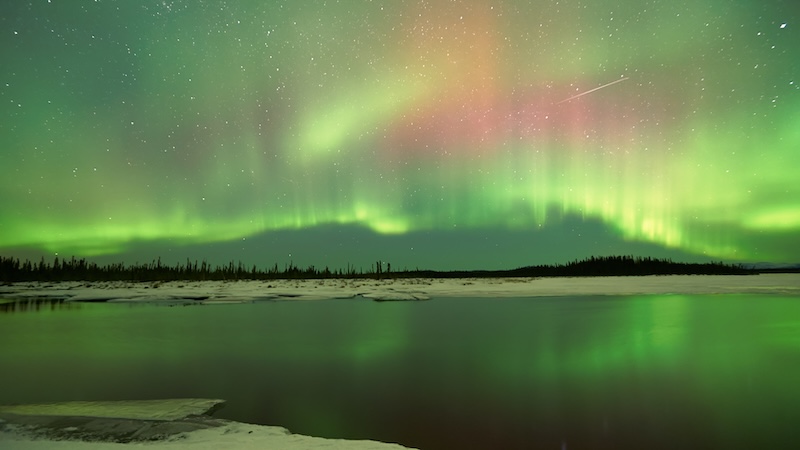
If seeing the northern lights is on your bucket list, head to Fairbanks, Alaska, where you can take them in at your own pace. For a tranquil experience, dip into the Chena Hot Springs. “Imagine soaking in steamy outdoor hot springs during subzero temperatures while the northern lights rage overhead,” says J.J. Krehbiel, an Alaska-based filmmaker who runs the Alaska travel guide and tourism website AlaskaExplored.com.
If you’re seeking a more active adventure, book a night tour dedicated to viewing the lights on a snowmobile (or snowmachine, as Alaskans prefer to call it) from, say, Fairbanks Snow Sleighers or Rod’s Alaskan Guide Service, Krehbiel suggests. Tours typically run $160 or more per adult.
A stay at Chena Hot Springs Resort’s Moose Lodge costs about $310 per night. And plenty of reasonably priced cabins in the area are available for rent, says Krehbiel, running about $180 to $210 per night. However, “be sure to check whether it’s a ‘dry cabin,’” he warns. Even if you’re used to roughing it on, say, a summer camping trip, you will want running water in the depths of an Alaskan winter.
Learn more about the wonders of astrotourism
Try dogsledding
Deemed the nation’s “sled dog capital,” Ely, Minnesota, just south of the Canadian border, is a prime destination for the sport. One of the best parts of planning a dogsledding trip: No extra personal equipment is required.
Just make sure you bundle up. “All a first-time dogsledder needs are warm layers — a base layer, an insulating mid layer, a waterproof/windproof outer layer and a hat that covers your ears,” says Randolph Briley, deputy director of outdoor recreation for Explore Minnesota.
A half-day dogsledding excursion is typically about $250, and Briley suggests budgeting an extra 10% to 20% of the price to tip your guide. For lodging, you’ll usually find the lowest prices in mid to late January through February, after the holiday surge, Briley says. And on weekdays, accommodations are generally cheaper than on weekends and holidays.
A room at Ely’s Silver Rapids Lodge is about $150 per night, and a cabin at the Lodge of Whispering Pines resort is about $425 nightly. The resorts also offer campsites with RV hookups, says Briley, including electricity, water and sewer at Silver Rapids. Budget-friendly wilderness cabins in the area typically run $50 to $200 per night, he says.
Take a “winter optional” ski trip
While Mammoth Mountain might be California’s better-known ski destination, Big Bear Mountain Resort is a great choice for those who enjoy winter sports but aren’t sold on spending their entire trip in the cold. Nestled in the San Bernardino Mountains of Southern California, Big Bear is about two hours from the coast, so you can ski all morning and then head down the mountain to sip a cocktail at a boardwalk bar in the evening.
Even in the coolest winter months, temperatures usually don’t drop much below about 50 degrees in Los Angeles. Daytime temperatures in December and January are usually in the sixties and seventies — great for lounging on a beach without breaking a sweat. You could also combine your ski trip with a visit to Temecula Valley, one of California’s less-crowded wine regions.
Up on the mountain, Snow Summit, one of three skiing areas at Big Bear, offers night lift tickets on select evenings so you can ski or snowboard under the stars. Tickets start at $59 for nights or $79 for a day pass, and you can tack on a complete equipment-rental package for about $35.
Rooms at lodges in the area run about $250 or more per night. If you book a stay along the Free Big Bear Trolley route, you can ride the trolley to any of the three ski resorts, as well as the shops and restaurants in the village. That way, you’ll skip the stress of looking for parking (which can be limited) and the fees.
Go ice bathing
Ice bathing (also known as cold plunging) is a popular wellness trend that involves an invigorating dip in an icy lake. If you want to give it a try without booking a trip to Scandinavia, then Glacier National Park, in Montana, is a great alternative.
The best ice-bathing options at the national park in winter are at Grinnell Lake and Iceberg Lake. If you choose the latter, you’ll combine ice bathing with a 10-mile round-trip hike through breathtaking winter wilderness.
Make sure you’re prepared for the unique challenges of winter hiking. There’s much less room for error when you’re outside in the colder months than at other times, says Shafer. “A wrong turn, wet layer, dead phone battery or minor injury that might be an inconvenience on a summer hike can become a much bigger problem when it’s 20 degrees and getting dark earlier.” She recommends wearing more layers than you think you’ll need, carrying a backup method of navigation (such as a paper map) and telling someone exactly where you’re going and when you plan to be back.
If you’re not confident in your winter wilderness skills, consider going on a ranger-led walk or snowshoeing expedition on weekends from January through March. You can also find paid tour options in the area.
Glacier National Park has an entrance fee of $25 per vehicle in the winter. Among the options for accommodations is a stay at Columbia Falls RV Park, ranging from about $83 per night for an RV site to $119 nightly for a cabin.
Rachael Green is a personal finance writer at Kiplinger.com. For more on this and similar money topics, visit Kiplinger.com.
©2026 The Kiplinger Washington Editors, Inc. Distributed by Tribune Content Agency, LLC.
Read more articles on having a great winter this season on Seniors Guide:
5 Ways to Actually Enjoy Winter This Year