Moving into a senior living community is about more than choosing a new home. For older adults, making friends in retirement communities can happen organically and through planned programs, helping build connections and a sense of belonging.
A healthy solution to loneliness
Loneliness can become more common with age, as retirement changes routines, friends move away or pass on, and health challenges make it harder to visit others, attend events, or stay involved in familiar activities.
Those changes can affect mood and more. Social isolation and loneliness have been linked with higher risks for depression, anxiety, cognitive decline, heart disease, and other health concerns. That is one reason the social side of senior living can matter so much.
A well-designed senior living community does not simply place people near one another. It creates opportunities for residents to meet, participate, contribute, and develop friendships in ways that feel natural to them.
Why community matters as we age
Friendship often happens easily earlier in life. People meet through school, work, parenting, neighborhoods, groups, and hobbies. Later in life, those built-in opportunities may shrink.
Senior living communities can help replace some of that daily social structure.
How making friends in senior living happens
Retirement communities provide opportunities for connections both through organized activities and organically.
Structured activities make meeting people easier
For many people, the hardest part of making friends is the first step. Scheduled activities and programs can make that less awkward by giving residents a reason to gather.
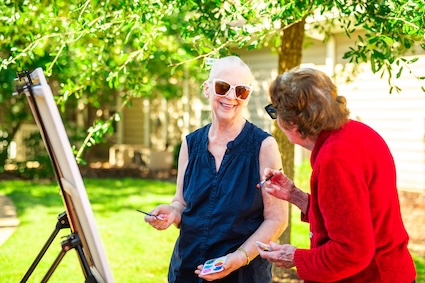
Many communities intentionally design programs and experiences that help residents connect around shared interests. At Commonwealth Senior Living, Signature Programs encourage residents to explore new hobbies, discover common passions, and engage with one another in meaningful ways. For example, their Travel the World Signature Program brings residents together through immersive cultural experiences, themed dining events, and educational opportunities inspired by destinations across the globe. Experiences like these can serve as natural conversation starters, helping planned activities evolve into genuine friendships and creating opportunities for spontaneous social interactions throughout the community.
Other organized programs that help in making friends in senior living include:
- Fitness activities
- Creative classes
- Social gatherings
- Learning programs
- Games
- Spiritual services
- Volunteer projects
- Group outings
These programs can be especially helpful for new residents. Instead of walking into a room and trying to make conversation from scratch, they can focus on the activity itself. The shared experience gives everyone something to talk about.
The activities also offer the opportunity to find people with common interests, such as in fitness and sports, the arts, or spirituality. These shared interests give residents a sense of identity beyond age or health status. They remind people that they are not just “seniors” or “residents.” They are readers, artists, gardeners, veterans, travelers, parents, grandparents, volunteers, cooks, card players, musicians, and friends.
For introverted residents, structured programs can also make socializing feel less pressured. A person does not have to be the life of the party to benefit from a book club, art class, walking group, or lecture. They simply have to show up.
Everyday encounters build belonging
Organized programs are important, but some of the most meaningful relationships develop outside the activity calendar.
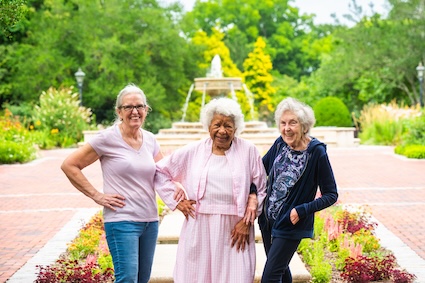
Residents may see the same neighbors at meals, join familiar faces in exercise classes, attend events together, or strike up conversations in shared spaces such as gardens, lounges, libraries, walking paths, and activity rooms.
That kind of regular contact matters. Over time, small repeated interactions can help residents feel known. Social engagement can support emotional well-being, mental stimulation, physical activity, and a stronger sense of purpose.
Informal encounters occur because people live near one another and have chances to cross paths, especially in shared social spaces. They can make a community feel more like home.
For many older adults, that sense of belonging makes the difference. It is not just about having something to do. It is about knowing there are people who notice you, greet you, invite you, and care whether you are there.
Different people, different kinds of connection
Not every resident wants the same social life. Some people thrive on a busy calendar, group outings, and large gatherings. Others prefer a few close friends, quiet conversations, and small groups.
Quality senior living communities offer more than one path to connection: lively events for extroverts, smaller groups for quieter residents, and spaces where people can simply sit and talk.
In retirement communities, making friends in senior living comes naturally. Meaningful connections built around people’s interests and identities can add up to a more satisfying daily life.
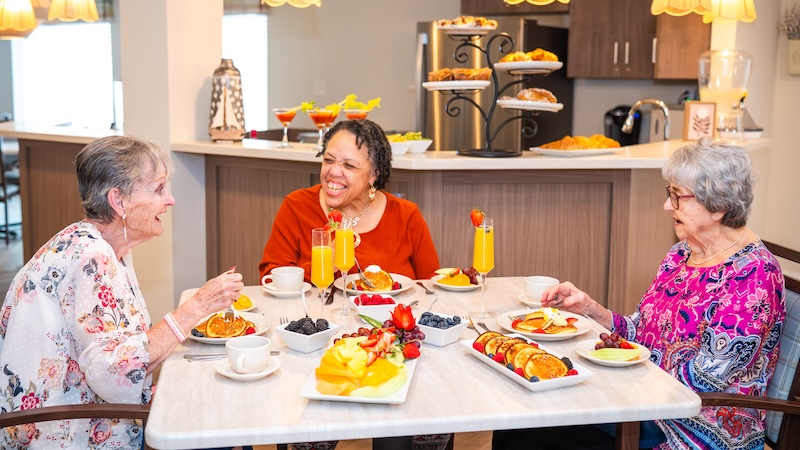
FEATURE IMAGE, TOP: Residents visit as they share brunch. Credit Commonwealth Senior Living.