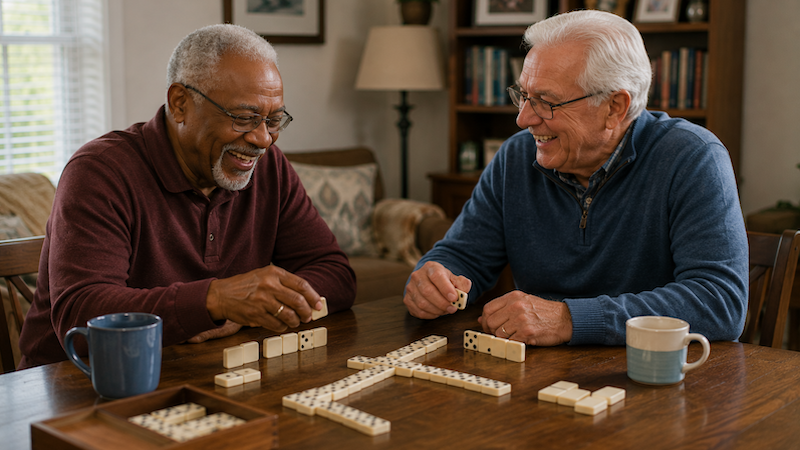
Seniors roommates – like the Golden Girls or the Odd Couple – are becoming a popular solution to reduce housing costs, combat loneliness, and add a layer of safety to daily life. This option can support aging in place or sometimes cut costs in a senior community.
Many seniors who live alone, whether in a private home or in a senior living community, struggle with expenses. They may feel lonely and a bit apprehensive about living by themselves, should they fall or have a medical emergency. To help defray costs and enjoy greater companionship and safety, some older adults are reliving their youth and taking on a roommate, both in senior communities and out in the larger community.
Benefits of shared housing for seniors
Having someone share your senior living apartment or private home offers benefits beyond the financial ones. Should something happen to you, there’s someone there to help you; if your roommate isn’t able to provide the assistance you need, they can call someone who can. You’re also there for them. This safety net will give both of you as well as your loved ones greater peace of mind.
Just like in your younger days, chores like making dinner, taking out the trash, and housekeeping can be shared. You may also have someone who may be able to help with those tasks that become increasingly difficult with age, like lifting a heavy box, opening a jar or even resolving a technology problem – or you may be the one helping out.
This arrangement can allow you to age in place for longer, providing a valuable bridge between living independently and the need for assisted living. But it’s important to be upfront about the support you expect from your new roommate before they move in.
Social benefits of senior roommates
Social isolation can lead to mental health issues like anxiety, depression, and suicide as well as to physical problems such as heart disease, dementia, and premature death. Having a companion can mitigate these risks. If you’re residing in a dwelling outside of a retirement community, you’ll benefit from having a live-in companion to talk to and share common interests. Even in a senior community where there are a multitude of ways to socialize, sometimes striking out on your own can be difficult. With a roommate, you’ll have a friend who may motivate you to give new activities a try and join you when you do.
 You’ll also have someone to share meals with. And eating with someone else isn’t just beneficial from a social standpoint – research suggests that older adults who regularly share meals with others tend to have better diet quality and food variety than those who frequently eat alone.
“Meaningful connections can reduce feelings of isolation, and shared housing can offer a beneficial sense of community and connection,” says Dr. Michelle Feng, a licensed psychologist specializing in geriatric psychology. “Seeing and interacting with others can be a good way to ‘get out of our own heads’ and engage in life with others.”
What’s more, living with a roommate can make a transition from home to senior living a little easier, especially if you’ve lived with a spouse for many years.
Choosing senior roommates
No matter how old you are, choosing someone who is compatible can be challenging. A handful of senior communities help residents find roommates. There are also homesharing programs across the country, which can facilitate your search for a private shared housing for seniors.
If you are looking on your own, check for compatibility in areas such as interests and hobbies, schedules, and health needs/physical abilities. Age doesn’t have to be a factor. Some seniors, who prefer a more temporary situation, have chosen to rent to students or interns and have found the intergenerational arrangement to be not only beneficial but also enriching.
It’s also smart to see if the other person places the same priority on things like cleanliness, safety, and paying bills on time. A written roommate agreement can ensure you’re both on the same page in terms of finances, chores, guests, and shared vs. private spaces, food, vanity products, etc.
Most retirement communities pair senior roommates of similar abilities – independent living, assisted living, memory care, etc. In a private home, that could be a consideration as well, such as two independent adults, so no one ends up being a caregiver. On the other hand, a roommate who has some challenges with the activities of daily living or medical needs but has resources for bringing in help could still make a match.
Many assisted living homes accommodate married couples of differing abilities, but fewer offer the same for companions. Aegis Living on the West Coast does allow non-married roommates as well as couples to live together despite differing needs. If one person starts to need more care, the pair can continue to share the same apartment or cottage.
Interdependence and independence in shared housing for seniors
While living with another person can provide you with support and companionship, it doesn’t mean you have to sacrifice your privacy or independence in the process. In many independent living communities, two- or three-bedroom units are available with ensuite baths to ensure privacy. And if you need some time away from your roomie, there are plenty of common areas outside your door to hang out with other people or just have some alone time.
The same level of privacy is possible in a private apartment or home as long as you have plenty of space. Occasionally, one roommate can take off for a day or weekend to give the other roommate the place to themselves.
Do your due diligence
In a private home, it’s up to you if you want to share your space with a roommate. Before committing, consider a trial period.
Also, be sure to run security checks, such as credit history, criminal background, and evictions. Ask for references from reliable sources and follow up to ensure the references are valid.
Not all retirement communities allow senior roommates. The sizes and types of spaces also varies. Be sure to know exactly what’s available and allowed before you sign on the dotted line.
Many people find themselves living alone in the stage of their lives when they need someone around the most. While you may not be able to find a spouse or share a home with adult children, living with a roommate (if you pick a good one) may be just what you need.