An easy, low-impact exercise could be as effective as cardio in managing hypertension. Sound too good to be true? A medical review of 270 randomized controlled trials found that isometric exercises can reduce blood pressure naturally.
Medical professionals have long touted heartrate-boosting physical activities like walking, jogging, and cycling as the gold standard for helping older adults naturally manage hypertension. But a recent review of 270 prior studies, published in the British Journal of Sports Medicine (BJSM), finds that when it comes to lowering blood pressure, isometric exercise is nearly twice as effective as any other form of cardiovascular workout. What’s more, it’s remarkably convenient.
Isometric exercises are static, low-impact, and easy to customize according to mobility levels – which makes them a fantastic option for seniors.
The method is as simple as picking a position – like, say, a wall squat, half-plank, or standing calf raise – and holding your body in it until your muscles start to tire. The duration varies depending on fitness level and posture, but usually falls somewhere between 20 seconds and two minutes. Workouts revolve around a sequence of five to eight simple poses. Take a few laps through the routine and you’re done.
“It’s an easily accessible form of exercise that you can do pretty much anywhere,” Johns Hopkins University geriatric division exercise physiologist and clinical research coordinator Meredith Dobrosielski told AARP. “You don’t need to go to a gym. You don’t need any equipment. You don’t have to spend a lot of time doing it. You just need your body. You can do this at home. And the benefits are great.”
In fact, the review published in BJSM found that a routine of just three isometric exercise sessions per week can bring results. Wall sits, for instance, lowered systolic blood pressure (the upper number in a reading) by 10 millimeters Hg and diastolic pressure (the lower number) by 5 mm Hg. That’s important, as research shows that naturally lowering blood pressure by even a few points is strongly linked to better long-term health outcomes.
The review noted that the findings provide a “data-driven framework to support the development of new exercise guideline recommendations for the prevention and treatment of arterial hypertension.”
Adding isometric exercises to your exercise regiment, one including cardiovascular activity and resistance training, will maximize overall positive health impacts.
Try these isometric exercises to reduce your blood pressure
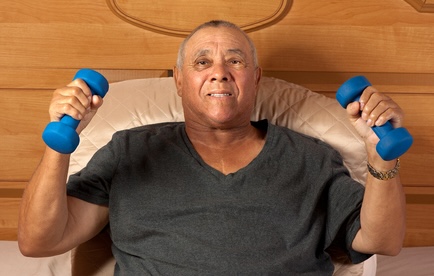
Interested in trying isometric exercises to reduce blood pressure? Certified personal trainer and Yes2Next fitness blogger, April Hattori, says getting started is easy. She recommends incorporating simple 15-minute workouts into your weekly routine and branching out from there. (See end of article for an isometric exercise session from Hattori.)
“The beauty of isometric exercises is their adaptability,” says Hattori. Those with limited mobility can do them in a seated position, while other participants can stand. You can start out holding positions for shorter intervals, then increase the duration as you build strength. Using small weights can heighten the challenge and benefits.
Ease into it, and don’t worry if your body trembles a bit during reps as your muscles get tired – that’s perfectly normal. Take 20- to 30- second breaks between each position and repeat the set two to four times, according to your fitness level.
Warmup
March in place for about two minutes as if you were in a parade. Then throw 10 or so gentle punches straight ahead with each hand. Finally, hold your arms by your sides and rotate them outward and up to touch your palms overhead. Do that three or four times.
Wall-sit or squat
Move near a wall and squat until your thighs are roughly parallel to the floor, as if you were sitting. If desired, you can place your lower back against the wall and use it to stabilize yourself. Try to maintain the seated position for 20-30 seconds. Work up from up there in future workouts.
If you can’t stand, sit on the edge of a chair with your palms on your knees and drive the heels of your feet hard into the floor.
Inverted biceps curl
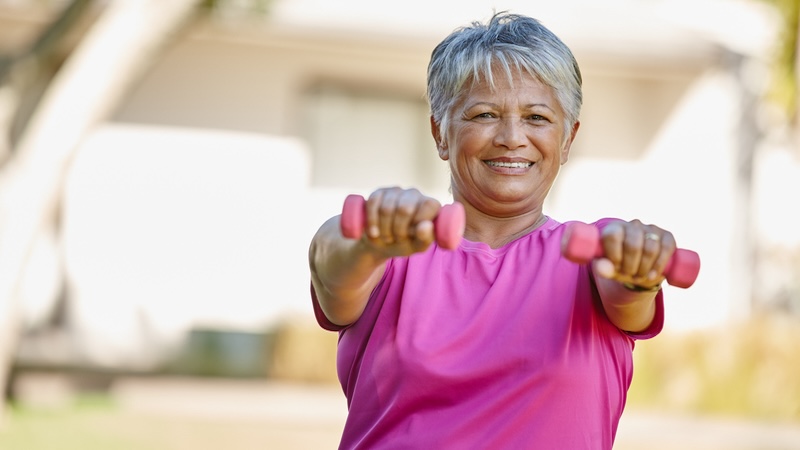
Hold small weights and stand or sit with your elbows tucked in against your sides and your palms facing the ceiling. Raise the weights so that your forearms are parallel to the floor and hold. If you don’t have weights, you can assume a similar position and push gently upward against a sturdy table with your palms.
Triceps kickback hold
Hold your weights with your arms hanging straight down and bend slightly forward at the waist while sitting or standing. Lift the weights directly upward toward your shoulders until they’re just below the height of your chest. Next, extend your arms backwards until they’re straight and hold them just above the angle of your back, flexing your triceps and squeezing your fists.
Lateral raise
Hold your weights or make palms-in fists against your outer thighs. Raise your arms upward away from your body and straight out until they’re nearly parallel to the floor. Your palms should be facing down as you hold the rep.
The findings that isometric exercises can reduce blood pressure offers hope for better health. However, those who have been diagnosed with hypertension or other medical conditions should consult their doctor before making changes to exercise routines.
Related: The Best Exercises for Seniors