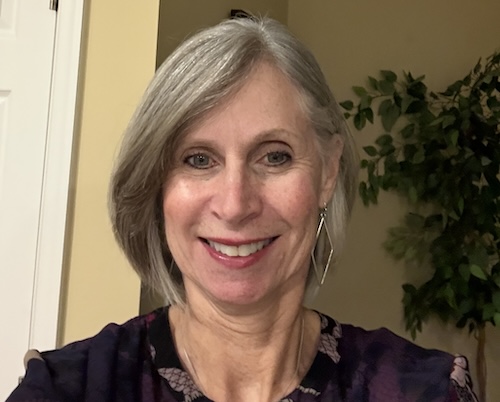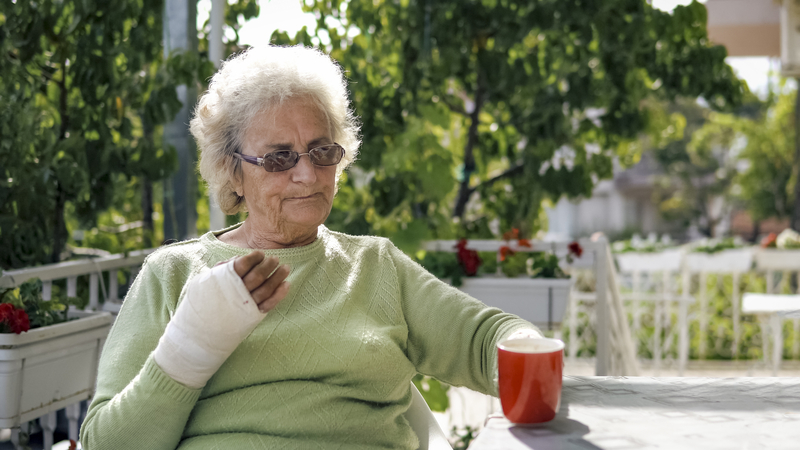
After a minor accident, Seniors Guide writer Terri Jones lost temporary use of her right hand. She researched tricks on how to function without the dominant hand and, here, she brings her lessons to readers. Jones’s experience offers inspiration for others suddenly facing a minor disability, from her account of overcoming challenges to specific useful workarounds, and perhaps even some lessons for those living with a long-term disability.
I have been extremely lucky to have broken only a couple small bones in my entire life, and these were tiny bones in my feet, which healed fairly quickly and without surgery. However, one day shy of my 66th birthday, I fell in a step aerobics class and fractured the wrist on my dominant hand, which required surgery and a rather cumbersome soft cast up to my elbow. As a result, I was extremely limited in what I could do.
While I have a husband who will do just about anything I need him to, I am attempting to navigate the world without the use of my dominant hand. (That includes writing this article!) Below are some tricks I’ve learned in the almost two weeks since my injury. These workarounds may be helpful not only for those with a temporary injury like myself but also for those who have permanently lost the use of their dominant arm.
Tricks that helped me function without the dominant hand
Open it
One of the first challenges I encountered was opening a Ziploc bag. I Googled tips and found a young woman, OneArmWonder, who produces YouTube videos showing how to accomplish everyday tasks one-handed. In one of those videos, she demonstrated how to use your pinky and ring fingers to hold down the longer flap of the Ziploc and your thumb and pointer finger to open the bag using the other flap. In essence, you turn your one good hand into two. Genius!
Then there were tasks where you need one hand to hold something and the other hand to open or rip it. For example, when I tried to rip toilet paper off the roll with one hand, it never ripped cleanly. So, I now use the elbow of my injured arm to hold the roll while I rip with my good hand.
Another challenge was my pill organizer, which has a button on the end that must be depressed to open each day’s pill compartment. Hmmmm, how was I going to manage that?! My husband, who has a more strategic mind than me, suggested that I push the side of the organizer up against our toaster oven to depress the button and then, with my good hand, pop open the lids to add or remove pills.
Related: Tips for Tackling Hard-to-Open Packaging
Fold it
Folding clothes seemed impossible until I watched an online video from One Arm University on how to fold everything from shirts to sheets with one arm! The trick is to lay the item flat, smooth out the wrinkles and then take your time to fold one arm, leg or corner over at a time. It definitely takes longer but with patience you can do an amazingly good job. I even think I’m folding better that way than with my normal method, which I typically rush through.
Brush it
I also struggled with putting toothpaste on my toothbrush without the brush flipping over and dumping the paste on the counter. Now I squirt a glob of toothpaste onto my tongue and scoop the toothpaste onto my brush. Once the brush is loaded, the brushing part is pretty easy with my left hand. For flossing, I’ve started using dental floss picks which, in my opinion, are harder to use but hopefully are doing the job. I guess I’ll find out at my next dental appointment!
While we’re on the subject of brushing, I can do a serviceable job of brushing my hair with my left hand, but I won’t be winning any beauty contests during my recuperation.
Moisturize it
I’m a fanatic about lip balm and lotion. Therefore, the prospect of not being able to moisturize was panicking me a bit. I immediately learned to open a tube of Chapstick with one hand and apply it to my lips. However, putting on face or body lotion was a different story. After some noodling, it occurred to me that I could open the lotion, squirt a little bit on a cotton pad and then use the pad or my fingers to apply the lotion.
Facilitate it
To get the job done, I use whatever’s available to me, including the elbow of my bad arm, my knees, my feet, and sometimes even my teeth (not sure what my dentist would say about that last one). Nine times out of 10, I succeed. But sometimes I need some outside help, and that’s where adaptive gadgets can come in handy!
Personally, I’m using sticky coasters to hold bottles and cans while I unscrew them as well as a one-handed cutting tool to safely slice open packages. Today I remembered a rarely used bagel slicer hidden away in a cabinet that allowed me to easily slice through slider buns for my lunch. I’m also aware of the variety of utensils and dishware designed to make dining easier because I wrote about them for Seniors Guide!
Even though I’m working hard to be as self-sufficient as possible, there are quite a few things I simply can’t seem to do with one hand, like opening a can, signing my name, giving my dog insulin injections, putting the backs on my earrings, clipping my nails, applying eye makeup, and using a hair dryer. And shaving my legs with my left hand just seems like asking for trouble. For those tasks I have to learn to ask for help – or ask myself if I really need to do them. Many tasks will just have to wait!
After all this is said and done, I hope I will have a fully functional right hand again, but I’m also excited about having improved function in my left hand. Who knows? Maybe I’ll be ambidextrous.
But besides teaching me a few tricks, this experience has reminded me that some people must adjust to this state of affairs long term. Every tip, trick, and workaround could be the difference between being severely limited and functional and independent.