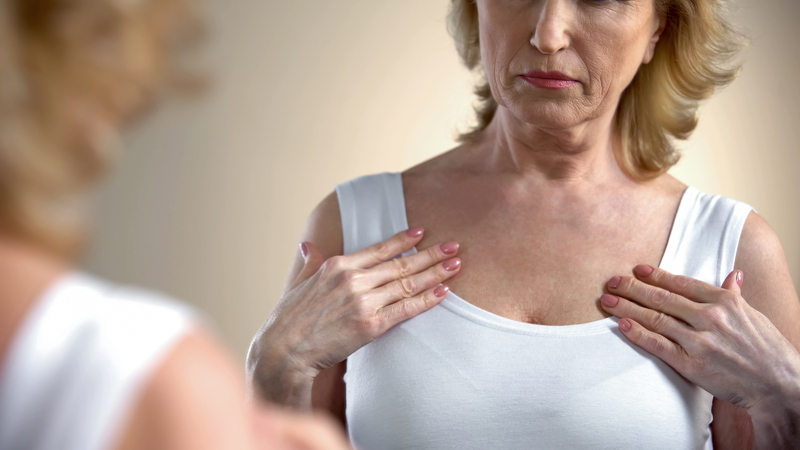
While women may have been informed of menopause-related changes of aging such as wrinkles, insomnia, muscle and bone loss, and more, they may be unaware that the breast changes as women age, too. Seniors Guide writer Terri Jones looks at the challenges of morphing breasts.
A woman’s breasts change throughout her life, starting as tiny buds that create barely noticeable hills in the flat surface of her chest and then blossoming into bosoms that can proudly fill out a bra, nourish a baby, and sometimes even turn heads. But after menopause, those organs that have served you both functionally and aesthetically for all these years undergo dramatic changes and may become a source of frustration, discomfort, and maybe even worry. Here’s what happens.
How the breast changes as women age
Less firmness
As you go through menopause and your estrogen level declines, the glandular tissue in your breasts, which is responsible for producing milk for babies, is largely replaced by fat. Fat isn’t as dense as glandular tissue, so when this change occurs, your breasts become softer and sometimes appear less full. This loss of firmness and change in shape can affect the way you look both naked and in clothes, which in turn, can impact your self-esteem. The upside is when breast density decreases, which can even affect fibrocystic tissue, it often makes your mammograms easier to read.
Sagging
Your breasts also have connective tissues that support them. Those tissues, along with your skin, lose elasticity with age, causing once perky boobs to give into the pull of gravity (like everything else on your body!) and stretch downward or even out to the sides. As a result, you may need more supportive, grandma-style bras and swimsuits to hoist your ta-tas into a desirable position and control the uncomfortable bounce. Unfortunately, even women who were never pregnant aren’t immune to their boobs pointing south (or east and west) as they age. All women’s breasts – mothers or not, large or small – will droop to some degree over time.
Larger or smaller
Many women experience some weight gain after menopause, and because your breasts are primarily composed of fat, these extra pounds can show up in your breasts. Even if you don’t gain weight, there’s often a redistribution of fat during this time, and the fat on your body can move from places like your hips or thighs to your boobs. In a 2004 study, approximately 20% of women admitted that they needed a larger bra after menopause. Only 2% went down a size.
Lumps and tenderness
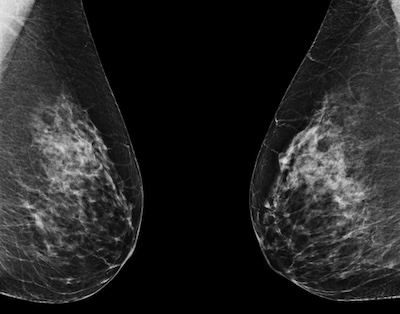 If your breasts were lumpy and tender before menopause, these symptoms will usually decrease after you’ve gone through the change. However, breast tenderness can still occur, around menopause because of fluctuating estrogen levels. Plus,breast cysts, lipomas, and fat necrosis, which are all benign, can occur at any age.* Plus, hormone replacement therapy may cause lumpiness and tenderness to return.
Nipple changes
With age, your nipples may also start to look different. Their color may become lighter or darker. Your nipples could also gradually become flat or inverted* due to milk ducts shortening. Plus, the area surrounding the nipple (the areola) could shrink to the point of almost invisibility.
Skin irritation
After menopause, collagen production drops significantly. You may already know this contributes to wrinkles on your face, but it can also cause the skin on your breasts to become thinner, drier, and generally more sensitive. This sensitivity could make your boobs more prone to irritation from certain fabrics, detergents or even sweat.
The changes of aging are many, for women and for men. Knowing what to expect can nurture a positive attitude on agingand prepare you to combat problems that may arise. An old Hasidic saying notes, “For the unlearned, old age is winter; for the learned, it is the season of the harvest.”
*NOTE: According to NIH, approximately 80% of breast cancer cases occur in women over 50. While many breast changes after menopause are normal and nothing to worry about, you should have your doctor check out any unusual changes, such as a new lump, nipple discharge, skin dimpling, sudden nipple inversion, redness, swelling, or a change in the size, shape, or appearance of only one breast. Even if you’ve recently had a normal mammogram, don’t ignore any unexplained breast changes.