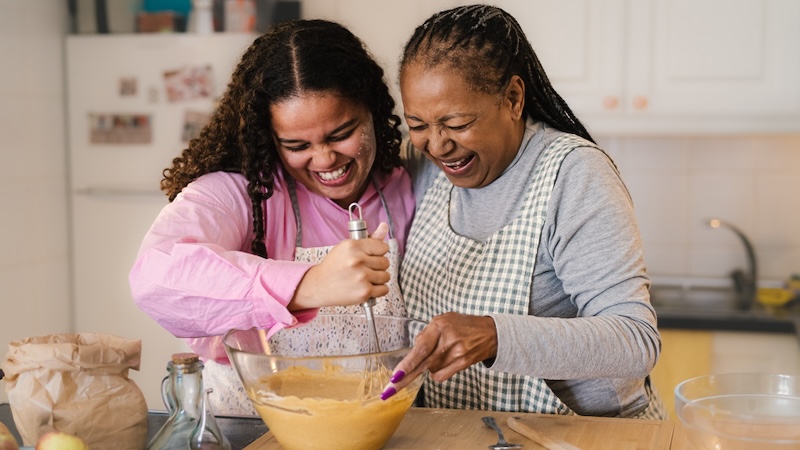
Elder women serve important family roles. As they pass on, the family can weaken unless a younger woman steps up, becoming the matriarch. Seniors Guide writer Terri Jones shares her insights from the changes in her family.
My mom passed away almost four years ago. Her sister died the year before her. Just last week, we lost one of my mom’s younger brothers. The other side of the family isn’t faring much better, with my 87-year-old dad, who has dementia, having recently fractured his hip and struggling with his mobility, and his sister, who is three years older, suffering from congestive heart failure in a nursing home.
Soon, my sister and I, along with our cousins (all female), will become the elder generation of our family. This evolution is inevitable in every family, but it can sneak up on you, and when you claim the mantle of matriarch, it can feel daunting.
While taking on this role can be a weighty responsibility, it can also become a position you’ll grow to treasure.
What is a matriarch?
The dictionary definition of “matriarch” is “a woman who rules or dominates a family, group, or state.” But when I think of a matriarch, I think of my Granny, who was widowed in her 30s and ran a business to support her two young kids on her own. When she wasn’t working long hours, she was gathering her tribe around her red Formica kitchen table for homecooked dinners and making sure everyone saved room for ice cream floats later. She had no trouble telling us when our hair needed combing, our shoes needed polishing, or our boyfriend was “nothing but trouble.” But she also was quick to let us know just how proud she was of each of us cousins.
Granny was the connective tissue that joined us together as a family, and when she died, our family slowly splintered apart. That’s because the matriarch of the family acts as the hub of the wheel that connects parents and siblings and cousins and keeps the family wheel rolling along. Although grandpas and dads also have a leadership role, they often don’t play as pivotal a role in the family as their female counterparts.
“Being matriarch isn’t just a new label; it’s about being the stabilizing force for loved ones as we all cope with significant loss and prepare to care for the next generation,” says Dr. Eboni Green, an author and advocate for caregivers.
“Responsibilities” in becoming the matriarch
Before you claim the crown of matriarch, consider these five critical responsibilities that go along with the job:
1. Love
First and foremost, a matriarch’s role is to love and nurture. When a child needs comforting, a teen needs support, or even when one of the older members of the family needs a shoulder, the matriarch offers a soft place to land.
2. Communication
Not only does a matriarch facilitate communication between family members and keep them connected, but she also conveys values, etiquette, recipes, religious faith, and any information that is inherently part of the family’s DNA.
3. Traditions
The elder woman in the family works hard to foster and preserve traditions that bond her family together. For example, my mother hosted a seafood feast at her house at the end of every summer and cooked soft shell crabs in her 40-year-old electric skillet on her back porch. She taught my sister the recipe and the exact right time to flip those crispy, golden-brown gems. When Mom passed away, my sister took up the soft-shell torch and now fries the crabs in the same skillet for her family.
4. Wisdom
Through their years on this planet, matriarchs are savvy, informed, and perceptive and use this wisdom to guide the younger generations in the family. Not only do they teach skills such as threading a sewing machine or putting air in a car’s tires, but they also are generous with their opinions and point of view. One matriarch explained that she enjoys answering her adult grandchildren’s questions with a perspective they can’t find on Google.
5. History
Matriarchs are the keepers of family history, including the photo albums, heirlooms such as china, silver and jewelry, but most importantly, the family stories about who married whom, which family member was disinherited, and why Great-Great Uncle Rupert spent six years in jail. “If you know whence you came, there is really no limit to where you can go,” wrote James Baldwin in The Fire Next Time.
While there are many daunting responsibilities involved in becoming the matriarch of your family, there are just as many rewards. Being the leader of your tribe provides you with a sense of purpose, deepens your family relationships, and allows you to grow in your empathy and wisdom. But perhaps most importantly, taking on this role gives you the chance to make an impact on the younger generation in your family. That reward will pay dividends for generations to come.