For millions of older adults and others recovering from an injury or illness or simply facing the changes of aging, walkers, canes, rollators, and other literal and figurative crutches help them stay safe. But is there a time to ditch the mobility aids?
The question isn’t whether mobility devices are good or bad – it’s whether an individual needs them. In some cases, overreliance can make it harder to get around and feel self-confident. Yet not using a mobility aid can often increase the risk of falls and serious injuries.
This article discusses pros and cons of mobility devices, times that one is necessary, and when it’s time to ditch the mobility aids. As with any important health issue, be sure to consult a professional.
The purpose of mobility aids
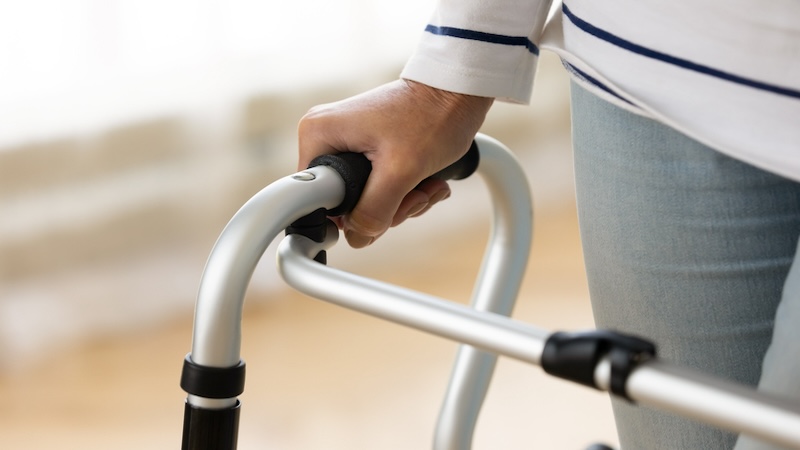
Mobility devices can provide stability, redistribute weight, reduce pain, and boost confidence in movement. Common aids are:
- Walking sticks and canes
- Walkers
- Rollators (walkers with four wheels and a seat)
- Wheelchairs and mobility scooters
These can significantly reduce the risk of falling for people with balance problems, weak muscles, neurological diseases, arthritis, or those recovering from surgery and injury.
In many cases, mobility aids help people maintain their independence.
Benefits of not using a walker or cane
For seniors without significant balance deficits or muscle weakness, walking offers important physical and psychological benefits that are best achieved without a mobility device.
1. Keeping your muscles strong and balanced
Walking strengthens your core, hips, legs, and stabilizing muscles, helping you maintain balance and posture. When a mobility aid takes on much of the effort, muscles lose their strength – already a concern for older adults.
To maintain strength and neuromuscular control, both important for long-term mobility, you need to safely challenge your body.
2. Slowing other physical decline
You have to use your balance, or you’ll lose it. Older adults who safely challenge their mobility may be able to slow down the decline in their ability to do things and stay independent for longer. Regular walking can also help keep your heart and joints healthy.
3. Promoting a natural walking style
Walking sticks, canes, walkers, and rollators can change your arm movements, trunk rotation, and stride length. Over time, limited movement patterns can cause stiffness or pain and limit future ability to walk well.
4. Better navigation over the terrain
It can be hard to move standard walkers over uneven ground, such as grass, gravel, or sand. Seniors with good balance may find it easier to get around in different places without a device, which in turn encourages them to be active outdoors and even meet new people.
5. Navigate faster and easier
Mobility devices can be sizable, unwieldy to transport, and hard to use in small indoor spaces, on public transportation, or in crowded places. Walking on your own can make everyday tasks easier and faster.
The risks of giving up mobility aids
Despite these advantages, abandoning a mobility aid prematurely can be dangerous. Falls remain one of the leading causes of injury among older adults, frequently resulting in fractures, hospitalization, and long-term functional decline.
In some situations, mobility aids actually enable greater activity levels by reducing pain and instability.
When mobility aids are necessary
Mobility devices should be viewed as helpful tools, not as signs of weakness. Many people benefit from them – for a brief period while they are recovering or for an extended period because of chronic conditions.
Here are some signs that you might need a mobility aid:
- Falling or stumbling frequently
- Using furniture or walls to lean on
- Balance issues and other health conditions
- Recent surgery or injury
In these situations, a mobility aid can make things safer, ease concerns about falling, and help people stay independent.
For some, mobility aids can increase activity levels, especially if the aids make them feel more comfortable tackling household chores or outings.
In the end, independence isn’t about whether a person uses a device – it’s about whether they can safely perform essential everyday tasks.
Achieving the right balance
Never let pride, stigma, or guesswork determine whether or not to ditch the mobility aids. Instead, the decision should include expert evaluations tailored to each individual.
A doctor or physical therapist can perform assessments to help in making the best decision, including:
- Balance tests
- Gait analysis
- Strength check
- Fall risk
- Endurance tests
Make changes slowly
If a senior wants to use a walker or a cane less often, they should do so gradually, and in conjunction with a skilled professional, such as a physical therapist. Some strategies might be:
- Training for strength and balance
- Walking practice with supervision
- Transitioning to a less-supportive device, such as from a walker to a cane
- Making the home safer
- Wearing appropriate shoes
These interventions can help people walk more steadily, lower the risk of falling, and support safe independence. If you ditch the mobility aids too quickly, it can increase risk of falling and reduce your confidence.
Addressing the stigma around mobility aids
Social stigma is still a big reason why people don’t use mobility aids. Some older adults view the devices as signs of aging or weakness, so they don’t get the help they need.
But if you think of mobility aids as tools for independence, you can shift your perspective. Walkers and canes help people move around safely, just like glasses help people see better, and hearing aids help people communicate with each other and ward off cognitive decline.
Final thoughts
The decision to ditch the mobility aids is very personal and should prioritize safety and well-being. The goal is not to get rid of the devices, but to make people as independent, safe, and physically able as possible. Concerns about how someone looks should never come before their safety, confidence, and quality of life.
Mobility aids are not always necessary or limiting. They are tools that can help people become more independent, but if they are used too much, they can make it harder to move and face physical challenges.
Instead of asking if you should get ditch the mobility aids, it might be better to ask what level of support lets you move around safely, confidently, and actively. Being independent doesn’t mean you don’t need help – it means you can live your life to the fullest and safely with whatever help you need.