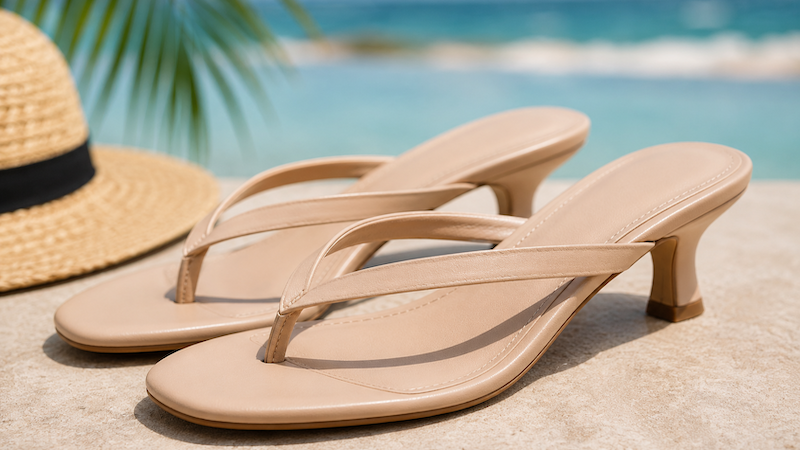
Fashion trends have a way of returning when we least expect them. This summer, one of the most surprising comebacks is heeled flip flops. Popularized in the late 1990s and early 2000s, the minimalist sandal has reemerged thanks to celebrity and influencer fashion, with style icons such as Hailey Bieber helping fuel renewed interest.
But while the look may be trendy, foot health experts say older adults should think twice before making heeled flip flops their go-to summer shoe. After all, proper foot care becomes even more important as we age.
“Although heeled flip flops have seen a surge in popularity in 2026 as part of the broader minimalist summer footwear trend, it is important to recognize that their fashion appeal does not necessarily align with functional foot support,” say footwear specialists at Elevate Your Sole.
The concern is simple: flip flops offer very little support, and adding a skinny heel can create additional stability challenges.
“Heeled flip flop styles combine elevation with minimal structural support, placing the foot in a less stable position,” Elevate Your Sole experts explain. “This combination can alter balance and increase pressure on the forefoot, particularly during prolonged wear or when walking on uneven surfaces.”
For older adults, balance and stability become increasingly important considerations. A shoe that shifts easily or requires the toes to grip constantly can contribute to fatigue and increase the risk of missteps.
Musculoskeletal physiotherapist Physio Ric says he frequently sees the effects of unsupportive summer footwear in his practice.
“In the clinic, I regularly treat patients with foot and ankle pain during the summer months, often linked to prolonged wear of unsupportive footwear such as flip flops, as they provide minimal arch and heel support,” he says.
The effects can extend beyond the feet.
“Over time, this can affect the kinetic chain, contributing to secondary issues such as hip and knee pain,” Ric says. “They also tend to encourage less efficient walking patterns, as the toes grip the sole to keep the footwear in place.”
The type of surface matters, too. Uneven sidewalks, cobblestone streets, grassy areas, and slippery surfaces can increase instability while wearing flip flops.
Another issue is shock absorption. Many flip flops feature thin, flexible soles that do little to cushion the impact of walking. Over time, that lack of support can contribute to discomfort and fatigue.
Common warning signs of overuse include heel pain, arch fatigue, calf soreness, and general foot discomfort by the end of the day.
If those symptoms sound familiar, your feet may be asking for a break.
After extended wear, experts recommend resting the feet, performing gentle stretches, and switching into more supportive footwear. Sandals with secure straps, contoured footbeds, cushioning, and built-in arch support can provide a safer alternative while still keeping feet cool during hot weather.
If you choose to wear a pair of cute flip flops, reserve them for short-term use, like trips to the pool, beach, spa, or around the hotel during vacation – not all-day wear. As tempting as the latest fashion trend may be, your feet might appreciate support over style—especially when summer adventures keep you on the move.
If you’re shopping for comfortable summer footwear, see Seniors Guide tips for buying the best shoes for seniors.
And remember that healthy feet play a critical role in mobility, balance, and independence as we age. Learn more about protecting your feet in our article on why foot care matters.
Article created with press release, AI assistance, and fact checking.