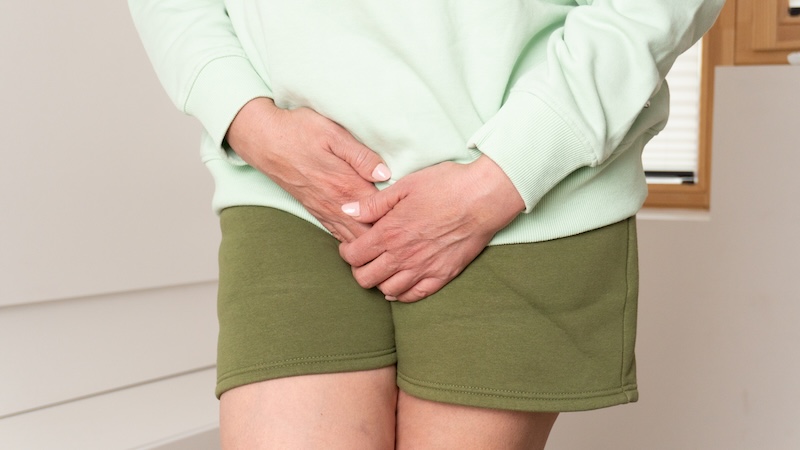
An overactive bladder can be inconvenient and embarrassing. Dr. Howard LeWine explains what happens and how to prevent leaks.
Question: I am a 61 year old woman. I started leaking when I cannot get to the bathroom quickly enough if I have the urge to urinate. I plan to see my doctor. But before I make the appointment, I wanted to know what treatments might be available.
Answer: Your symptoms are suggestive of an overactive bladder, with what doctors call urge incontinence. The condition is very common, especially in postmenopausal women.
Urge incontinence is the inability to hold back urine after feeling the urge to urinate. Leaks happen because the bladder has not received the signal to remain relaxed. Instead, it contracts, squeezing out the urine without warning.
But less than half of the estimated 15 million women in the United States who suffer from it seek treatment. Many regard urinary incontinence as a normal part of aging.
As a result, a lot of women resign themselves to wearing pads or other types of protection that absorb urine. But urinary incontinence at any age is not normal. And in most cases, nonsurgical therapies can cure or dramatically reduce it.
Sometimes a urinary tract infection causes urge incontinence. A simple urine test can determine if you have one. And some medications and overuse of alcohol or caffeine can make it worse.
Treatment of an overactive bladder often starts with exercises to strengthen the pelvic-floor muscles or a referral for pelvic floor physical therapy. For example, Kegel exercises involve contracting your pelvic-floor muscles. This will help to improve control of the urethra. Contracting these muscles also signals the bladder muscles to relax. This allows the bladder to hold the urine.
You can retrain your bladder with timed urination. You can slowly increase the bladder’s storage capacity. If you normally have urine leakage about every three hours, urinate every two hours. Focus on suppressing the urge. Gradually, the intervals between urinating become further apart.
Some lifestyle changes can also help, such as limiting caffeine and alcohol; managing constipation; and losing weight if appropriate.
If Kegel exercises and bladder retraining don’t work, your doctor may suggest other therapies. These include:
- A medicine to relax the bladder muscles. Drugs prescribed include oxybutynin (Ditropan), fesoterodine (Toviaz), solifenacin (Vesicare), tolterodine (Detrol), mirabegron (Myrbetriq), and vibegron (Gemtesa).
- Biofeedback to help the mind-body connection. A pressure probe is placed in the vagina. The probe is hooked up to a monitor that displays a graph. It lets you know if you’re doing Kegel exercises properly.
- Vaginal estrogen cream or ring.
- Botox injections. Botox can be injected into the main muscle responsible for bladder contraction. Botox relaxes the muscle to allow the bladder to fill more and help prevent urine from being forced out.
- Therapies that use nerve stimulation (neuromodulation).
Howard LeWine, M.D., is an internist at Brigham and Women’s Hospital in Boston and assistant professor at Harvard Medical School. For additional consumer health information, please visit www.health.harvard.edu.
©2026 Harvard University. For terms of use, please see https://www.health.harvard.edu/terms-of-use. Distributed by Tribune Content Agency, LLC.
Read more helpful articles on Seniors Guide:
Kegel Exercises for Men and Women