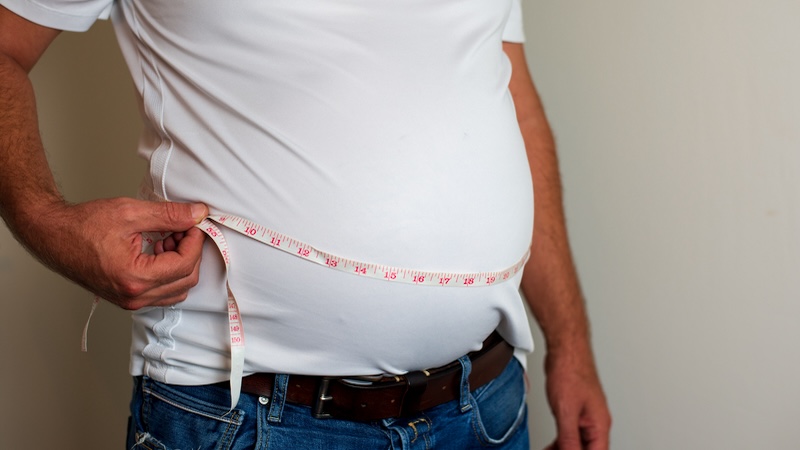
As a measure of body fat and health, BMI is flawed, especially in men. Dr. Howard LeWine of Harvard Health discusses alternative criteria of overweight and obesity.
Question: The correlation between BMI and excess body fat seems to be flawed, especially in men. What’s your view?
Answer: Your body mass index (BMI) is a number that is calculated based on your height and weight. (Many online calculators are available to determine your BMI.) According to the CDC, a normal BMI is 18.5 to 25. BMI helps determine if someone is underweight, as a BMI below 18.5 might indicate a medical problem or nutrient deficiency.
BMI is more commonly used to determine whether a person is overweight or obese. The calculation is also considered as a proxy for excess body fat. A very high BMI of 40 or higher (severe obesity) almost always indicates excess fat. However, many people with a BMI greater than 25 but less than 30 (overweight), and even people with a BMI of 30 or higher (obesity), might carry extra fat without it affecting their daily life or health. Also, some people with normal BMI still have excess fat in places that put them at increased risk of chronic conditions.
Related: Medicare and Obesity Treatment Drugs
That’s why, on Jan. 14, 2025, a group of 58 world experts convened by The Lancet Diabetes & Endocrinology published new criteria of overweight and obesity that are not based solely on BMI. Instead, the authors recommended adding two additional categories: preclinical obesity and clinical obesity to better reflect the amount and location of excess fat and muscle mass.
If BMI is flawed, does that mean we should ignore BMI between the extremes of underweight and severe obesity? Not necessarily. But BMI needs to be combined with these additional measurements. Muscle mass and location of fat have significant impact on the risk of adverse health effects.
Visceral fat lies deep inside the belly and surrounds organs. Unlike subcutaneous fat, which is directly under the skin, visceral fat can infiltrate the liver leading to fatty liver disease and cirrhosis; and extra belly fat increases the risk of diabetes, cardiovascular disease, and kidney problems.
BMI is not a good way to measure visceral fat. A better approach is to measure your waist size just above your navel at the end of a natural breath while standing tall. A waist size of 40 inches or more in a man almost always indicates excess visceral fat. Ideally, men between 5 feet, 6 inches and 6 feet, 6 inches tall should aim for a waist size of no more than one-half their height.
An alternative way to assess visceral fat is waist-to-hip ratio. For men, waist size divided by the circumference measured around the hips should be less than 1.0. (Some references suggest an ideal ratio for men is no more than 0.9). In simple terms: your waist should be smaller than your hips.
Howard LeWine, M.D., is an internist at Brigham and Women’s Hospital in Boston and assistant professor at Harvard Medical School. For additional consumer health information, please visit www.health.harvard.edu.
©2025 Harvard University. For terms of use, please see https://www.health.harvard.edu/terms-of-use. Distributed by Tribune Content Agency, LLC.
Read more helpful articles on BMI and health on Seniors Guide:
Why Do We Use BMI?