
Remaining in their home allows older adults to stay in a familiar, beloved space, but the realities of aging can add new challenges. Successful aging in place looks at ways to stay connected, maintain essential routines, combat loneliness, and get help with everyday tasks before small challenges become big ones. Can AI tools for seniors help?
A growing category of AI-powered technology hopes to meet these goals. Some are already being used in homes and aging-services programs. Others remain early-stage ideas with limited real-world reviews.
These technologies generally fall into several categories: companion devices that provide conversation and reminders; home-monitoring systems that look for changes in routines or possible safety concerns; medication and wellness tools that support daily habits; physical-assistance robots that help with tasks such as carrying items; and emerging cognitive or movement-based systems designed to support brain health, balance, or activity.
The promise is appealing: technology that can remind, encourage, check in, entertain, or assist without requiring a family member or caregiver to be present every moment. But the reality is more complicated. AI tools may help some older adults, but they are not substitutes for caregivers, emergency response systems, medical care, or human connection.
Three vetted AI-powered tools for seniors
Three distinctively different new AI tools have been out long enough to demonstrate their potential and receive reviews.
ElliQ: A companion designed for older adults
One of the better-known AI companion devices is ElliQ, made by Intuition Robotics. Unlike a generic smart speaker, ElliQ was designed specifically for older adults. The tabletop device can talk with users, suggest activities, play music, offer wellness prompts, remind people about routines, and encourage social connection.
ElliQ has received generally positive attention for its ability to provide companionship to older adults who live alone. Some users describe it as friendly, engaging, and helpful in structuring the day. Public aging-services programs, including initiatives in New York, have used ElliQ as one tool to address loneliness and social isolation.
Its strength is that it is proactive. Rather than waiting for the user to ask a question, ElliQ may initiate conversation, suggest a breathing exercise, ask about sleep, or encourage a walk. For someone who spends long stretches of the day alone, that kind of prompt can feel less like a gadget and more like a daily presence.
Still, ElliQ has limits. It is not a medical alert device. It should not be relied upon to detect every emergency, summon help in a crisis, or replace regular human check-ins. It also may not be a good fit for everyone. Some people may find the interaction charming; others may find it intrusive, repetitive, or simply not useful. People with significant cognitive impairment, hearing challenges, or discomfort with technology may need extra support.
Hyodol: A companion doll with research behind it
Hyodol, developed in South Korea, takes a different approach. It looks more like a soft doll than a sleek electronic device and is sometimes described as a “robot grandchild.” It can speak, respond to touch, offer reminders, provide emotional support, and send information to caregivers or care managers.
Hyodol is notable because it has been used in real-world care settings and studied among older adults, including socially isolated seniors. Research has suggested possible benefits for mood, companionship, and quality of life. Its design also reflects a different philosophy: rather than presenting itself as a smart speaker or screen-based assistant, it offers a warm, physical presence that some users may find comforting.
That design may appeal to some older adults, especially those who enjoy a nurturing or affectionate interaction. But it may not appeal to everyone. Some people may find a doll-like robot infantilizing or uncomfortable. Others may bond with it in ways that raise ethical questions about emotional dependence.
As with all companion technologies, Hyodol should be viewed as a supplement, not a solution. It may help reduce loneliness or support routines, but it cannot replace family, friends, professional caregivers, medical care, or community involvement.
Labrador Retriever: Practical help around the house
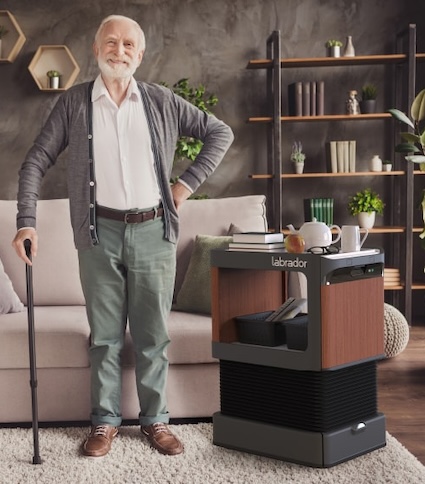
The Labrador Retriever robot from Labrador Systems is different from ElliQ and Hyodol. It is not primarily a companion. It is a mobile assistive robot, much like a self-driving shelf or cart, designed to help people move items around the home.
For older adults with mobility challenges, fatigue, chronic pain, balance problems, or fall risk, carrying everyday objects can become a real barrier to independence. A glass of water, a meal tray, laundry, medications, books, or personal items may be manageable once but exhausting or unsafe repeatedly throughout the day.
The Retriever is designed to help with those small but important tasks. It can carry items from one place to another, potentially reducing unnecessary trips across the house and limiting the need to carry objects while using a walker or cane.
This type of technology may be especially useful because it addresses a practical need. Many older adults do not necessarily want a robot friend; they want help staying safe and functional. A device that carries things may be less emotionally complicated than a companion robot.
However, it will not help with stairs, bathing, dressing, toileting, falls, cooking, or hands-on care. It also requires enough space, setup, comfort with technology, and financial access to make sense. For now, it is best understood as a promising assistive tool for a specific group of users rather than a mainstream household product.
Other AI tools for seniors are emerging
Other senior-focused AI products and other technologies are in use or beginning to appear, but not all have the same level of review or evidence.
Some apps and services use AI for wellness check-ins, reminders, or conversation. Others monitor patterns in the home, such as movement, sound, or changes in daily routines. These tools may be able to alert caregivers if something seems unusual, such as a missed routine, nighttime wandering, or a possible fall.
There are also experimental or early-stage robots such as PECOLA, developed in Taiwan as a companion and monitoring robot for older adults living alone. It was designed to analyze daily activity, sleep, diet, emotions, and possible falls. However, products like PECOLA appear to have far less public consumer review evidence than more established tools.
Similarly, names such as Sunshine AI or Sunny can be confusing because several similarly named products exist. Some are not specifically designed for seniors, and some have very limited public reviews. Before purchasing any AI tool, families should make sure they understand exactly what the product does, who makes it, how long it has been available, and whether independent reviews or research exist.
Questions to ask before trying AI tools for seniors
Before buying or recommending an AI-powered product for an older adult, ask practical questions:
- Is it mainly for companionship, reminders, safety monitoring, or physical assistance?
- Does it contact emergency services, or does it only notify a caregiver?
- Who can see or hear the data it collects?
- Are conversations recorded or reviewed?
- Is there a monthly subscription?
- What happens if the internet goes out?
- Can the older adult use it comfortably?
- Will it reduce loneliness, or could it increase isolation by replacing human contact?
Technology can be helpful only when it fits the person’s real needs, preferences, home, budget, and support system.
Helpful, but not a replacement for people
AI-powered tools for seniors are likely to become more common. Some may help older adults feel less alone. Others may support medication routines, encourage activity, detect changes, or make daily tasks easier.
But the best use of this technology is as a support layer, not a replacement for human care. A robot can remind someone to drink water, but it cannot notice everything a loving family member, neighbor, nurse, or friend might notice. It can provide conversation, but it cannot fully replace relationships. It can assist with routines, but it cannot make medical decisions or provide hands-on care.
For the right person, the right tool may offer comfort, structure, safety, or independence. The key is to choose carefully, ask hard questions, and remember that aging well still depends on human connection.
Related: Other smart solutions for aging in place
Article written with assistance from ChatGPT. Sources and claims have been confirmed and copy modified for Seniors Guide.