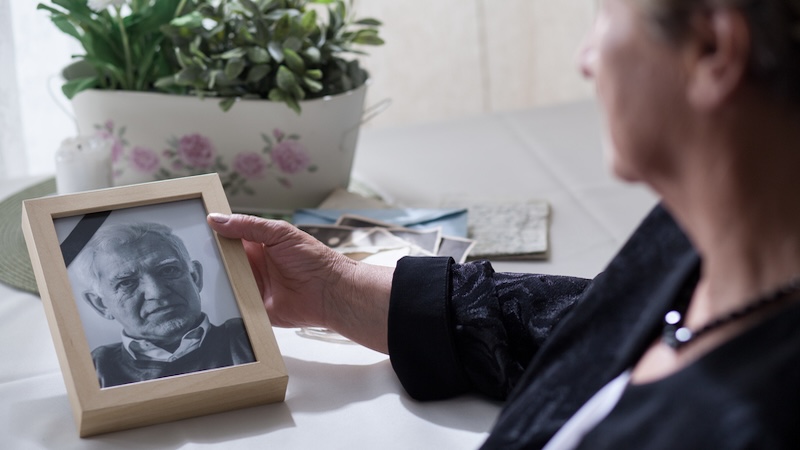
A loved one’s death brings painful emotions, often including the fear that we will forget the special details that meant so much in life. Seniors Guide writer Terri Jones suggests five ways to stay connected and keep the memories strong.
When someone you love dies, you long to remember everything about them: their voice, their smile, their personality, their touch. Losing them can leave a huge hole in your life, but if you can manage to keep key things about them alive, it can help make that hole a little smaller and keep grief from consuming you.
“The desire to stay connected to someone who died is normal and deeply human,” says grief coach Shelby Forsythia. “Many grievers are looking for actions they can take – things they can actually do – to help them feel close to their loved ones who are no longer here.”
After I lost my mom three years ago, I believed that her memory was imprinted on my brain and my heart. She was such a strong figure throughout my 60+ years – how could I ever forget her? But memory is a funny thing: when it’s not reinforced, it naturally begins to fade.
To ensure that didn’t happen with my mother, I began gathering everything I could to keep her spirit alive. I saved her voicemails, texts, and emails and listened to and reread them over and over. I wore pieces of her clothing and jewelry to feel her wrapped around me and breathe in her lingering scent. I looked at decades of photos of her and framed several of my favorite, one of which sits on my kitchen counter where I can see her (and she can keep an eye on me) all day, every day. And as much as possible, I called up her face, her voice, the feel of her arms around me to keep her present in my life.
Making your unique connections after your loved one’s death
Here are five ways to keep your loved one close after they’re gone.
1. Communicate with them
You read that right. Even though they are no longer physically present, communicating with them after a loved one’s death can keep you connected. You can communicate with them verbally or by journaling or in writing. Tell them how you’re doing; express your love for them and how much you miss them.
According to grief coach Larry Carlat, “If you’re open to it, you can learn a lot by listening to them. … They will help shape you into the different person you’re becoming. Your convos with them – as imagined as they may seem – are one of the best ways to process your loss.”
2. Pay attention to signs
One of my mother’s favorite songs was “Somewhere Over the Rainbow” by Israel “IZ” Kamakawiwo‘ole. We played it for her in her final days and at her funeral service. After she died, I heard this song often, the first time at a wine tasting in Austin, Texas, where my husband and I traveled for my birthday less than a month after she died. With the first few chords from the acoustic guitarist, I was overcome with the sense that my mom was there with me. Since then, I usually hear this song when I am stressed or struggling with something, the times when I need my mother the most. These signs from our departed loved ones are all around us; we just need to watch for them.
Related: Musings on Afterlife, Science and His Wife’s Death
3. Make a list of their favorite sayings
Most people have words or sayings that are so them. Perhaps your husband used to affectionately refer to you as “Sweet’ums” or your grandma would tell you that “you looked like you just stepped out of a bandbox” when you had on your good church clothes. When we hear someone else use these phrases, it instantly recalls that special person in your life. Making a list of these phrases and referring to them every now and then can keep that person present in your life.
4. Read their notes or social media
 If your loved one had social media or a day-timer or jotted comments on recipes or reminders around the house, reading these posts or notes after a loved one’s death will recall their distinctiveness and make you feel close to them. If the notes are in their handwriting, all the better! I have my great-grandmother’s diary from when she was in her late teens. While I never knew Great-Grandmother Grace, reading her diary entries in her fading handwriting makes me feel as though I did.
5. Use your senses
To create a full picture of your loved one, Forsythia recommends triggering your senses with an easy exercise. Write down all five senses (sight, sound, smell, touch and taste) and then under each of these senses, list all the things you think of when you recall that special person in your life. Under “sight,” you might write that your wife had the most beautiful green eyes or she sometimes stuck out her tongue when she was concentrating. For “smell,” maybe she always smelled like lavender because of her favorite soap. Remembering these unique traits will make you smile and help you feel connected to the person who is gone.
But don’t wait for someone to pass away to capture and store what they meant to you. Prepare for this time by saving emails, voicemails, and letters, recording conversations or even a question-and-answer session about their life or relationship with you, or writing down sweet things they say to you. I do this with my 86-year-old dad. One day, you’ll be glad you made effort. I know I will!