America celebrates its 250th anniversary this year. North Carolina will join the festivities, commemorating the state’s history and the important role it played in the American Revolution. Dubbed “America 250 NC,” the commemoration includes activities, exhibits, and events to honor the occasion.
North Carolina’s role in the American Revolution
The state’s slogan is “First in Freedom” for a reason. North Carolina was the first colony whose governing body formally voted to seek independence from Great Britain, through the Halifax Resolves. North Carolinians experienced internal divisions – families and communities torn between Patriots versus Loyalists. The colony was the site of skirmishes, raids, militia actions, and battles. Frontier fighters from North Carolina – the Overmountain Men – played a decisive role in the victory at the Battle of Kings Mountain, a turning point in the Southern campaign.
Historic sites for honoring America 250 NC
Here are some historic sites by region to help you celebrate the nation’s 250th anniversary.
Charlotte region
- Charlotte Museum of History. In honor of the anniversary, the museum presents American Revolution: The Augmented Exhibition, with an interactive, video-game-powered exhibit on Revolutionary times, plus a special gallery dedicated to the Revolution and tours of the historic Alexander house.
Coastal region
-

Reenactment at Historic Halifax. Credit: NC Department of Natural and Cultural Resources Historic Halifax State Historic Site – Halifax was the site of the Fourth Provincial Congress in 1776 and became a wartime political center. The historic site hosts a museum and restored buildings. In April, Halifax Resolves Days honors the groundbreaking move to independence with music, exhibits, and more.
- Moores Creek National Battlefield – The first Revolutionary War battle in the state took place here on Feb. 27, 1776. Today, guests can explore the visitor center and stroll the trails.
- Tryon Palace – Built for Royal Governor William Tryon, the palace was where British officials governed the colony and enforced imperial policies – thus it was where colonists resentful of taxes and governance turned their anger, eventually driving out the royal governor and seizing the palace. Visitors can wander the gardens, tour the home, and participate in special events.
Triad Region
- Alamance Battleground State Historic Site – In 1771, an group of armed farmers, calling themselves Regulators, fought Royal Governor Tryon’s militia. Visitors can step onto the location of the Battle of Alamance and learn from educational programs and exhibits.
- Guilford Courthouse National Military Park – Fought on March 15, 1781, the Battle of Guilford Courthouse was a turning point in the Revolution. At the park, you can tour, walk trails, visit a homestead, view more than 20 monuments, and check out the visitor center.
Triangle region
- House in the Horseshoe – Fighting broke out around this residence of Philip Alston in 1772 as a group of citizen-soldiers came under fire by Tories. (As of press time, the site is temporarily closed for construction of a new visitor center, so verify before visiting.)
Western region
- Overmountain Victory State Trail – This 330-mile trail stretches from Virginia and Tennessee into the western part of North Carolina then down into South Carolina. It marks the path the patriots took as they prepared to fight the Tories at the Battle of Kings Mountain in South Carolina in 1780, a pivotal point in the Revolutionary War.
Celebrate America 250 NC at the Capitol on Independence Day
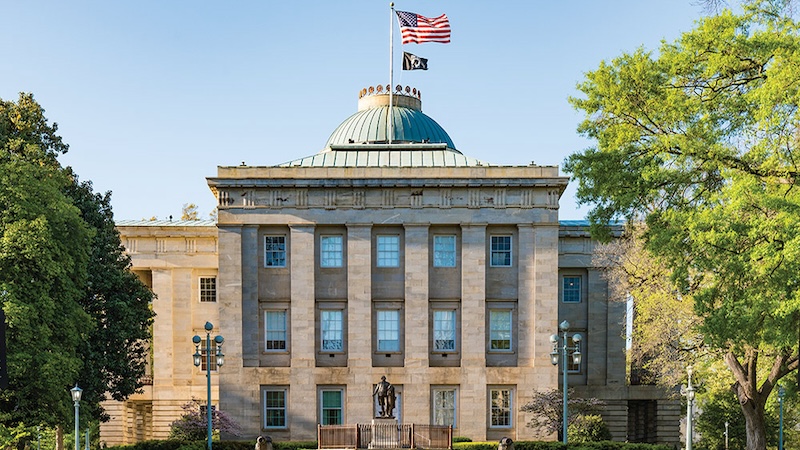
July 4 will explode with Independence Day activities at the North Carolina State Capitol in Raleigh. The free event will include musical performances, historic interpreters, hands-on activities and exhibits, a naturalization ceremony, and a reading of the Declaration of Independence.
Fourth of July will be celebrated around the state, including at Guilford Courthouse, Fort Macon State Park, Historic Halifax, and numerous cities and communities.
Learn About North Carolina’s History from Home
You don’t need to leave home to learn about North Carolina in the American Revolution. America250.nc.gov/learn/history offers numerous digital exhibits that can help you learn about the state’s beginnings.
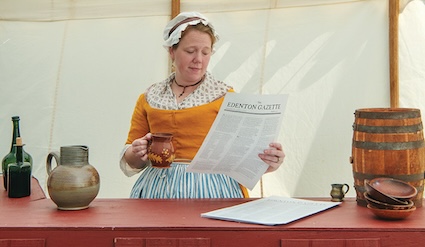
There you’ll learn North Carolina’s estimated population in 1770 , the number of N.C. men who signed the Declaration of Independence, and the number of women who participated in the Edenton Tea Party. You’ll get unique perspectives into what colonial life was like for different groups of people, including Native Americans, women, and slaves. You’ll also find links to timelines of the colonists’ efforts to resist the British, see how North Carolina celebrated the nation’s bicentennial in 1976, and more.
Many of the historic sites above – Moore’s Creek, Guilford Courthouse, and others – also offer informative online tools such as virtual tours and educational videos.
Discover more historic sites, exhibits, and America 250 NC events at America250.NC.gov.
Get a taste of other North Carolina travel stories written specifically for our Seniors Guide audience: the NC food scene, musical landscape, and senior-friendly state parks.
This article first appeared in the Seniors Guide North Carolina print magazine. Request your copy of our regional editions here.