The benefits of spreading kindness reach far, beginning with positive effects on our own physical and mental health and positively impacting others. Seniors Guide writer Terri Jones examines the benefits and offers tips on how to be more kind.
Every day, the news is filled with crimes, divisiveness, and hate. While the bad can overshadow the good and lead you to believe that there’s no kindness left in the world, The World Happiness Report discovered that that’s not the case. Instead, it found that 70% of the world’s population had performed at least one kind act in the past month, and, according to the report’s co-author, that number is significant. While the percentage of kind people has decreased since the COVID-19 lockdown, when people seemed more eager to help one another, it’s risen since the time prior to COVID.
And there are efforts to grow that number even higher. In fact, there’s practically a kindness crusade out there. Everywhere you look, there are signs, shirts, books, pillows, and even movements, such as the Great Kindness Challenge, the Kindness Factory, World Kindness Day (Nov. 13) and Random Acts of Kindness, motivating people to be more compassionate and generous.
Why aren’t people kind?
To understand how to inspire people to be kind, it’s important to first understand why they may be unkind to begin with. Ranking right up there is online discourse with its resulting anonymity factor. According to Psychology Today, when people are hidden behind the veil of the internet, “the normal ‘rules’ of polite society don’t seem to apply.” You can debate, insult, and demean others without fear of retribution or the accountability of communicating face to face.
Other people never had a kindness role model growing up and weren’t taught empathy or generosity. People who feel inferior may choose to diminish the people around, hoping for a measure of control or self-esteem.
Findings from a recent study also suggest that many people simply aren’t aware of the impact their kindness can have on others or they may underestimate the ripple effect of helping others.
The impacts of spreading kindness
When you open a door for a stranger or give a homeless person money, you make that person happy, but you’ll probably also reap benefits yourself. In American Psychiatric Association’s Healthy Minds Poll, 90% of respondents said that when someone was kind to them, it felt good; however, almost as many of those surveyed (89%) reported positive feelings when they were the ones bestowing the kindness. Moreover, helping others can make you feel better than doing something good for yourself.
Kindness has also been found to benefit your health, lowering blood pressure, reducing cortisol (the stress hormone) and preventing sleep disorders. Dr. Kelli Harding, an assistant clinical professor of psychiatry at Columbia University Irving Medical Center, explains that it can also improve your ability to mentally and physically deal with illness and adversity. And if you express your kindness by volunteering, you may even live longer, according to Harvard Health!
Easy ways to show kindness
Whatever their situation, practically everyone can find a way to be kind, benefiting themselves and others.
Tell the guy who mows your lawn or the lady behind the deli counter what a good job they’ve done and you’re sure to make them smile (maybe even make their day)! But there are so many other ways to show kindness in your daily life.
Here are a few tips for spreading kindness:
- Offer to run errands or walk the dog of a neighbor who is ill … or just because!
- Let the person behind you in the check-out line go ahead of you
- Hold the door for someone
- Give a larger than normal tip to wait staff or your dogwalker
- Compliment a nurse or other caregiver on their fun scrubs or jewelry
- Ask about an acquaintance’s grandkids – and ooh and ahh over the pictures
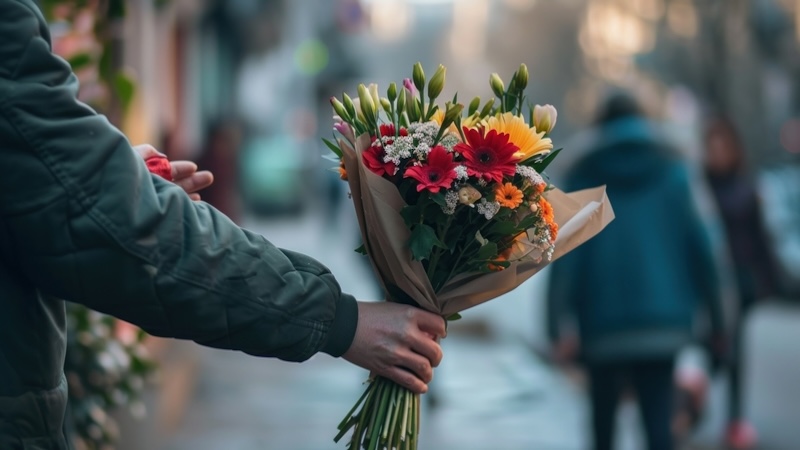
- And don’t forget to be kind to those closest to you! Bring home their favorite baked good or bottle of wine or have flowers or a meal delivered.
Sometimes just not complaining when there’s a long wait at the doctor’s office or a waitress gets your order wrong is the most powerful kindness for the moment!
Even graciously accepting help can be be kind, especially when you accompany it with a warm smile and thanks
Cultivating a kind mindset
For some, performing selfless deeds just don’t come naturally. But with a little work, you can become a kinder person, says Tyler VanderWeele, co-director of the Initiative on Health, Spirituality, and Religion at the Harvard T.H. Chan School of Public Health. To cultivate spreading kindness, he suggests picking one day a week for six weeks and doing five kind things that day.
“I don’t think it makes sense to try to internally build up kind feelings and then wait to act on those feelings,” says VanderWeele. “It’s better to start with the actions and hope the feelings will emerge.” Ideally, those compassionate acts will become habit-forming.
Paying it forward
Recently, after my husband, Don, had surgery, he and I were struck by the outpouring of concern and generosity that we received. While we’re transplants from another city and have only known the friends we’ve made here for a few years, one couple invited us to dinner pre-surgery and many texted with well wishes. Following the surgery, my phone constantly pinged with people checking in on Don, and two friends even showed up at our door with homemade meals. And every time I talk or text with someone now, they inquire as to how we’re both doing.
Since this unexpected kindness meant so much to me, I now feel more motivated to reach out when others are struggling. And perhaps my kindness will prompt them to do the same. After all, kindness begets kindness!